

Why the groups are small
New tools are easiest to learn when you can ask about the thing in front of you, at the moment it stops making sense. In a large room that question waits for the break, or it never gets asked, and the session carries on without you.
Places on every workshop are limited so the sessions stay hands-on. Everyone gets time, and nobody sits stuck on one screen for long.
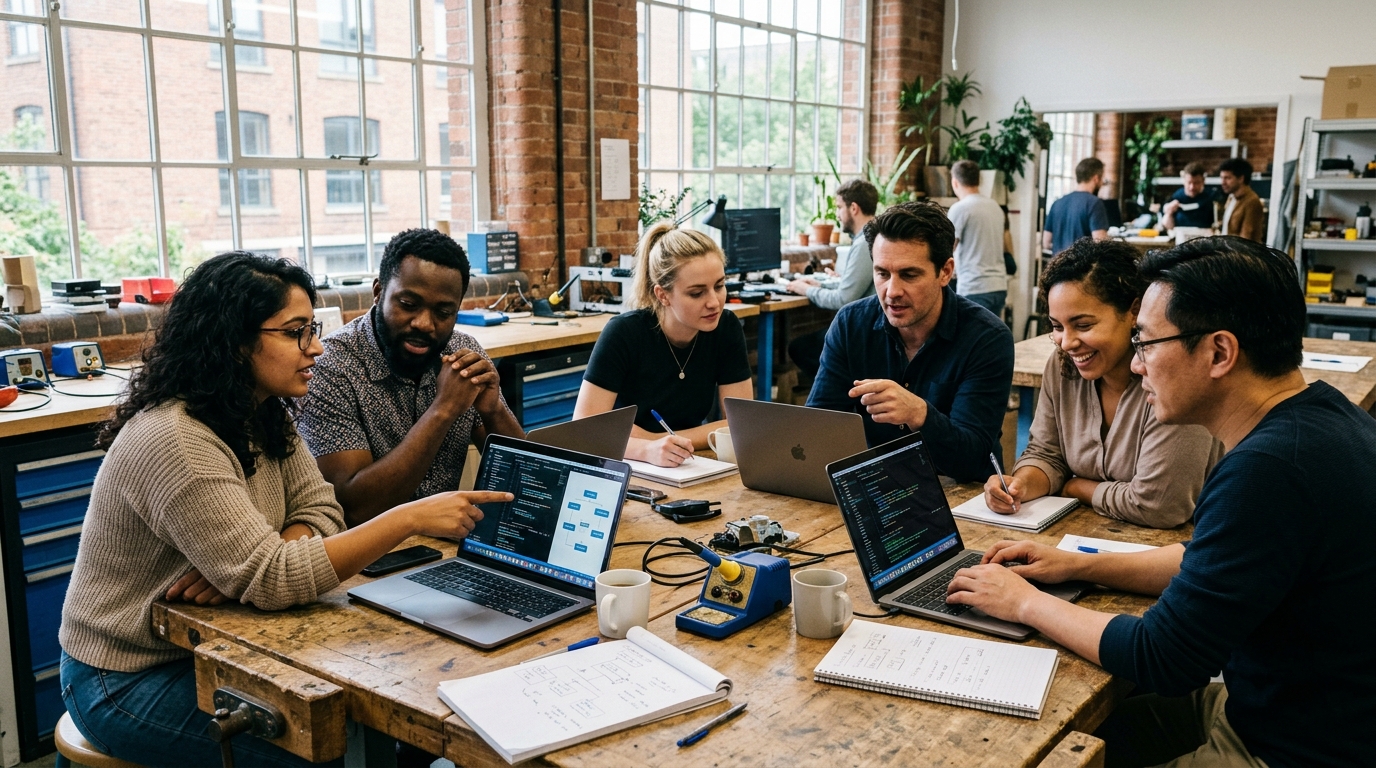
What the room is like
One table, laptops open, and each person developing an idea of their own. You'll hear what the others are working on as the day goes on, and hearing how someone else solved a problem is often the quickest way past your own.
The group brings together jobseekers, recent graduates, people changing career and people running a business, each starting from a different place. Nobody is expected to keep pace with anybody else.
Who it suits
A small group suits people who learn best by asking, and people who have started an online course before and lost momentum halfway through. You don't need a coding background. You should be comfortable using a computer, managing files and folders, using a web browser and working with everyday software on your own.
To see who else the workshops are for, read Who it is for. For how the time is spent, read The two days.